


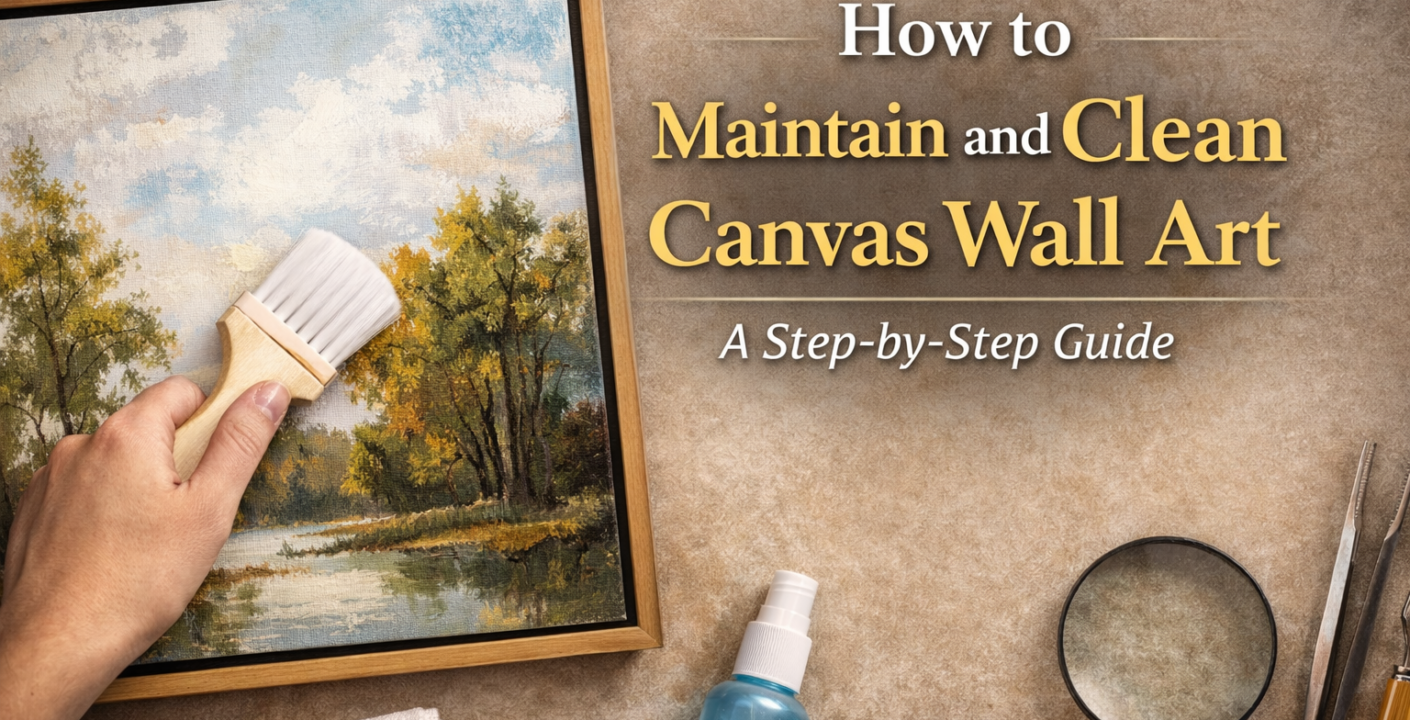
कैनवास दीवार कला घरों को सजाने के सबसे लोकप्रिय तरीकों में से एक है, कार्यालयों, दीर्घाओं, और वाणिज्यिक स्थान. Whether it’s a large canvas print, फ़्रेमयुक्त कलाकृति, या हाथ से चित्रित कैनवास, इसकी सुंदरता और दीर्घायु बनाए रखने के लिए उचित रखरखाव और सफाई आवश्यक है.
अधिक समय तक, धूल, नमी, सूरज की रोशनी, and environmental factors can affect the appearance of canvas artwork. Without proper care, colors may fade, surfaces may accumulate dust, and the canvas may become damaged.
In this comprehensive guide, you will learn how to maintain and clean canvas wall art safely, including step-by-step cleaning methods, maintenance tips, and professional care recommendations.
Why Proper Canvas Art Maintenance Is Important
Taking care of your canvas artwork ensures it remains vibrant and beautiful for many years.
1. Preserves Color and Detail
Dust and dirt can dull the colors of canvas prints and paintings. Regular cleaning helps maintain the artwork’s brightness and clarity.
2. Prevents Damage
Improper handling or environmental exposure can damage canvas surfaces, frames, or stretcher bars.
3. Extends Artwork Lifespan
With proper maintenance, canvas artwork can last for decades without losing its quality.
4. Maintains Interior Aesthetic
Clean artwork enhances the overall appearance of your home or office décor.
Understanding Canvas Wall Art Materials
Before cleaning canvas artwork, it’s important to understand its structure.
Canvas wall art usually consists of three main components:
Canvas Fabric
Typically made from cotton or linen, the canvas fabric holds the printed or painted artwork.
Stretcher Frame
The canvas is stretched over a wooden frame known as the stretcher bar.
Protective Coating
Many canvas prints include a protective varnish or coating that helps resist dust and UV damage.
Understanding these components helps you clean the artwork safely without damaging it.
Step-by-Step Guide to Cleaning Canvas Wall Art
Step 1: Remove Loose Dust
Dust is the most common issue affecting canvas artwork.
How to Remove Dust
Use one of the following tools:
-
Soft microfiber cloth
-
Feather duster
-
Soft paintbrush
Cleaning Method
-
Gently wipe the canvas surface using a dry microfiber cloth.
-
Move in light circular motions.
-
Avoid pressing too hard on the canvas.
Regular dusting helps prevent buildup that can affect the artwork’s appearance.
Step 2: Use a Soft Brush for Textured Canvas
Some canvas paintings have textured surfaces.
For these artworks:
-
Use a soft artist brush or makeup brush.
-
Lightly sweep across the canvas surface.
-
Remove dust from corners and edges.
This method is particularly useful for hand-painted canvas artwork.
Step 3: Clean Light Stains Carefully
If the canvas has small stains or marks, clean them carefully.
Materials Needed
-
Slightly damp microfiber cloth
-
Distilled water
Cleaning Method
-
Lightly dampen the cloth with distilled water.
-
Gently dab the stained area.
-
Avoid rubbing aggressively.
-
Let the canvas air dry naturally.
Important: Never soak the canvas with water.
Step 4: Clean the Frame
If your canvas art has a frame, clean it separately.
For Wooden Frames
-
Use a dry cloth or wood cleaner.
For Metal Frames
-
Use a microfiber cloth with mild cleaner.
Cleaning the frame enhances the overall appearance of the artwork.
Step 5: Check the Back of the Canvas
Dust and insects can accumulate on the back of the canvas.
To clean it:
-
Carefully remove the artwork from the wall.
-
Wipe the back surface with a dry cloth.
-
Check for loose staples or frame damage.
Regular inspection helps prevent long-term damage.
How Often Should You Clean Canvas Art?
Cleaning frequency depends on the environment.
Recommended Cleaning Schedule
-
Light dusting: Every 2–4 weeks
-
Deep inspection: Every 6 months
-
Professional cleaning: Every few years (if necessary)
Rooms with higher dust levels may require more frequent cleaning.
Best Places to Hang Canvas Wall Art
Proper placement can reduce the need for frequent cleaning.
Avoid Direct Sunlight
UV exposure can fade canvas artwork over time.
Avoid High Humidity
Bathrooms and kitchens may cause moisture damage.
Keep Away from Heat Sources
Fireplaces and heaters can dry out the canvas.
Maintain Proper Ventilation
Good air circulation helps prevent dust accumulation.
Common Mistakes to Avoid When Cleaning Canvas Art
Using Harsh Chemicals
Chemical cleaners can damage canvas surfaces and cause discoloration.
Applying Too Much Water
Excess moisture can weaken canvas fabric.
Scrubbing the Surface
Aggressive scrubbing can damage paint layers or prints.
Using Rough Cloths
Rough materials can scratch or damage the canvas.
Professional Tips for Canvas Art Maintenance
Use Protective Coating
Some canvas prints come with UV-protective coatings that help preserve colors.
Use Floating Frames
Floating frames protect the canvas edges while enhancing the artwork’s appearance.
Rotate Artwork Occasionally
Rotating artwork prevents uneven fading from sunlight.
Maintain Indoor Humidity
Ideal humidity levels help protect canvas fabric from expansion or shrinkage.
Long-Term Care Tips for Canvas Artwork
Store Artwork Properly
If storing canvas artwork:
-
Wrap it in acid-free paper.
-
Store it in a dry environment.
Handle Artwork Carefully
Always hold the canvas by the frame or stretcher bars, not the canvas surface.
Inspect Regularly
Check for signs of:
-
Dust buildup
-
Loose frames
-
Canvas sagging
Early detection helps prevent serious damage.
When to Seek Professional Cleaning
Some canvas artwork requires professional care.
Consider professional restoration if you notice:
-
Deep stains
-
Paint cracking
-
Mold or mildew
-
Severe discoloration
Professional art restorers have specialized tools and techniques to safely clean delicate artwork.
Final Thoughts
Canvas wall art is a timeless decorative element that enhances the beauty of any space. तथापि, maintaining its appearance requires regular care, gentle cleaning methods, and proper placement.
By following the step-by-step cleaning techniques and maintenance tips outlined in this guide, you can keep your canvas artwork looking vibrant and beautiful for many years.
Remember, the key to preserving canvas art is gentle handling, regular dusting, and avoiding harsh cleaning methods.
With proper care, your canvas wall art can remain a stunning centerpiece in your home or office décor.
1. How do you clean canvas wall art safely?
The safest way to clean canvas wall art is by using a dry microfiber cloth or soft brush to remove dust. For small stains, gently dab the area with a slightly damp cloth using distilled water.
2. Can you use water to clean canvas prints?
Yes, but only a very small amount of distilled water should be used. Excess moisture can damage the canvas fabric and artwork.
3. How often should canvas wall art be cleaned?
Canvas artwork should be lightly dusted every 2–4 weeks to prevent dust buildup and maintain its appearance.
4. Can sunlight damage canvas art?
Yes. Direct sunlight can cause color fading and material deterioration over time. It is best to place canvas artwork in areas with indirect light.
5. What should you avoid when cleaning canvas artwork?
Avoid using chemical cleaners, rough cloths, excessive water, and aggressive scrubbing, as these can damage the canvas surface.
6. Can you clean canvas wall art with a vacuum cleaner?
Yes, you can carefully use a vacuum cleaner with a soft brush attachment to remove dust from canvas artwork. तथापि, the suction should be kept very low, and the vacuum should not directly touch the canvas surface to avoid damage.
7. What is the best cloth to clean canvas art?
A soft microfiber cloth is the best option for cleaning canvas artwork. Microfiber cloths are gentle, non-abrasive, and effective at removing dust without scratching or damaging the canvas surface.
8. Can mold grow on canvas wall art?
Yes, mold can develop on canvas art if it is exposed to high humidity or moisture for long periods. To prevent mold growth, keep artwork in a well-ventilated room with controlled humidity levels.
9. How do I protect canvas wall art from dust?
To protect canvas art from dust:
-
Clean it regularly with a microfiber cloth
-
Keep windows closed in dusty environments
-
Use floating frames or protective frames
-
Maintain proper room ventilation
These steps help keep artwork clean for longer periods.
10. Should canvas paintings be framed?
Canvas paintings do not always require frames, but floating frames or wooden frames can enhance the appearance and protect the edges of the artwork.
11. How long does canvas wall art last?
High-quality canvas wall art can last 20 to 100 years or more, depending on the materials used and how well it is maintained. Proper cleaning, avoiding sunlight, and controlling humidity can significantly extend its lifespan.
12. Can you use cleaning sprays on canvas prints?
No, cleaning sprays and chemical cleaners should never be used on canvas prints because they may damage the ink, paint, or protective coating.
13. How do I prevent canvas artwork from fading?
To prevent fading:
-
Avoid direct sunlight
-
Use UV-protective coatings
-
Maintain indoor temperature and humidity
-
Rotate artwork occasionally
These steps help preserve the colors of canvas artwork.
14. Is it safe to wipe canvas art with a damp cloth?
Yes, but only if the cloth is slightly damp with distilled water. Never soak the canvas or apply excessive moisture.
15. Can canvas wall art be repaired if damaged?
Yes, minor damage such as small tears or loose canvas can often be repaired by professional art restorers or framing experts.